
November is your chance to remove weeds from your garden for good – 3 'dangerous' ones to watch out for

These garden pests can bust through concrete, or leave you with nasty burns 🌱
- Autumn is an especially effective time to pull and dig out garden weeds
- But there are a few gardeners should be careful around
- These include one with blister and burn-causing sap
- Others even have laws around their control and safe removal, which it’s best to be aware of
Autumn will soon be coming to an end, and with it, your chance of having a tidier, less weed-filled garden next spring.
It can be one of the best times to remove unwanted weeds from your garden, and this month will be many gardeners’ final chance before the weather gets too cold. Experts at online gardening magazine Gardeningetc say that by leaving weeds to hide away underground over winter, you’re giving them the chance to get stronger, and come back with a vengeance once the weather starts to warm.
You’ve still got time, however. The Royal Horticultural Society (RHS) adds that digging at this time of year is very efficient at killing annual weeds, and will also allow you to pick out any perennial weed roots to stop them in their tracks.
Sometimes, the criteria by which we dub certain plants as ‘weeds’ can be a little harsh. But at the same time, the UK is now unfortunately home to a wide range of invasive species that can both smother and out-compete our natives, and can even risk causing serious property damage. Some are so problematic, that if you don’t control them, you risk falling foul of the law.
Here are three gardeners need to keep a vigilant eye out for, as well as what you need to know about removing them safely:
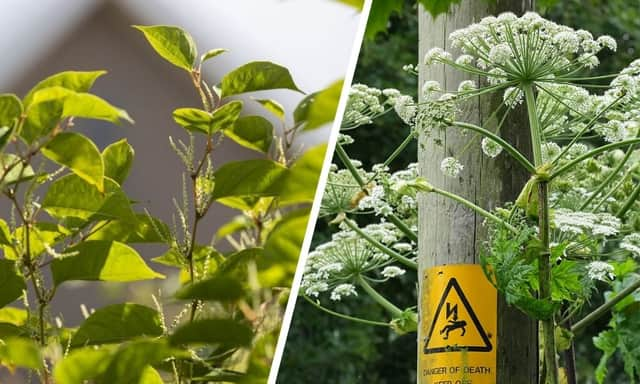

1. Japanese knotweed
Japanese knotweed was first brought over to the UK as a decorative garden plant, but it’s now a big problem that can even affect your property value. It grows rapidly and is incredibly hardy. Famously, it can also cause property damage, snaking its way through any joints, cracks or weaknesses it finds, even in tarmac or paving.
You can recognise it as a young plant by it rounded pink buds that form at ground level in the spring. The RHS says that these quickly grow into bamboo-like stems with reddish-purple speckling, and spade-like leaves. At this time of year, these stems will have died back for the winter, and the long stems will appear brown and dried out.
Legally, you have to declare its presence when selling your property. It can affect buyers’ mortgage applications, with lenders often requiring you to have an eradication plan for getting rid of it. It is also classed as ‘controlled waste’, meaning that it can legally only be disposed of at approved sites.
Hiring a company that specialises in invasive weed control is usually the best way to deal with Japanese knotweed, the charity advises. This is because it is easy to accidentally spread fragments of rhizome or stem when trying to dig it out yourself, which can lie dormant for years before springing back to life.
2. Giant hogweed
Another plant originally introduced as a garden ornamental, this giant has now become widely invasive - and it’s dangerous to boot. It grows quickly, shooting up to 20 feet tall and spreading out to cover metres of ground.
Giant hogweed is dangerous because of its sap, which contains a chemical called furocoumarin. If this sap gets on your skin, it will make it extremely sensitive to the sun, to the point where you will easily get severe burns and blistering. Getting it into your eyes can cause temporary or permanent blindness, whilst breathing in sap particles can cause respiratory problems. Many people who come into contact with it require hospital treatment.
You can identify this plant by the ‘rosettes’ of serrated, bright green leaves that push out of the ground in its early years. Once mature, the plant will start to grow long, umbrella-like stems of upwards-facing white flowers, which the RHS says will in turn become “masses of penny-sized, paper-thin seeds with distinctive dark brown stripes”.
It is illegal to plant giant hogweed or to cause it to spread, and there are restrictions on growing, cultivating, selling and transporting it. It is also classified as ‘controlled waste’, so it can’t be added to your home compost, council green waste or general waste bins. While the charity does recommend getting rid of it if it appears in your garden, it says the best way to do this is to hire a professional.
3. Himalayan balsam
Don’t let its pretty pink flowers fool you, this is yet another invasive plant originally brought over for decoration. But it too is now causing some serious issues. A single Himalayan balsam plant can produce hundreds of seeds in explosive pods, and if they find their way to waterways, will form enormous stands that smother and kill native plants.
This is just the beginning of the environmental damage it can cause. While it can quickly colonise a site, it is also an annual, and by winter it’ll leave only seeds behind. This means that the riverbanks, streams and ditches it prefers to call home are then very prone to soil erosion.
Himalayan balsam can be recognised by its tall, upright stems and serrated, lance-like leaves. Its sweet-scented pink flowers may still be blooming in some parts of the country, although they will soon give way to elongated seed pods.
While it isn’t illegal to have it in your garden, the RHS says it is illegal to let it spread, and there are again restrictions on growing, cultivating, selling or transporting it. It still recommends cutting it back or removing it if possible, before it forms its seeds. You must destroy it rather than adding it to your green bin, or dispose of it at an approved site (or hire a professional to do this for you).
Interested in what else you can do in your garden this month? Here are three things you can plant in your garden in November, according to experts.