
Milton Keynes man invents stinger fence with hidden spikes to stop cars damaging grass
Kevin Pringle, who lives in Milton Keynes, invented a stinger fence with hidden spikes to stop people parking on grass at his home.
An ex-prison officer has created an innocent-looking garden fence designed to stop nightmare parking - with tiny spikes hidden inside to deflate tyres.
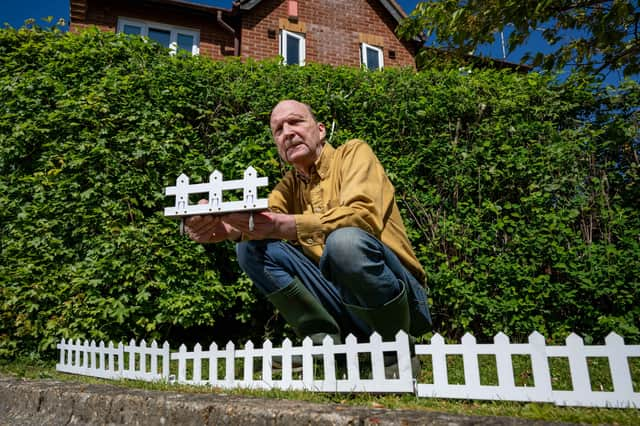
Kevin Pringle, 64, patented his own simple but effective product to keep cars from mounting and damaging grass verges after cars left "muddy trenches" at his Milton Keynes home.
He installed his picket-style Smart Fence, which costs around £40 for half a metre, on his front garden measuring four-foot-wide outside his semi-detached home. The fence has secret spikes which activate when a car hits and slowly deflates its tyres, acting the same way as a police-used stinger. The retiree said the barrier could be used by councils to stop illegal traveller encampments from setting up on grassland and cricket pitches - or by estates, schools and hotels.

Kevin said: "The quality of driving and parking has without a doubt gotten worse in recent years. Section 34 of the Road Traffic Act says it's an offence to drive anywhere other than a designated carriageway but you see illegal parking everywhere. Because nothing is done about it, people don't care and I don't understand why they don't realise the effect they're having.
"When I searched for solutions, the only suggestion I found was to place big boulders around the edge. While this does deter vandals, since they know they’ll risk damaging their vehicle, it creates two new problems - it makes lawn care much harder and the boulders themselves are not very attractive. I became determined to find an answer that would both keep the verge tidy and make maintenance easier."

The former prison officer said he had been plagued by illegal parking tearing up his own lawn which led to his "lightbulb moment".
He said: "When I first bought the house, the grass verge that goes to the road was in a bit of a mess. I cut the grass and trimmed the hedge.
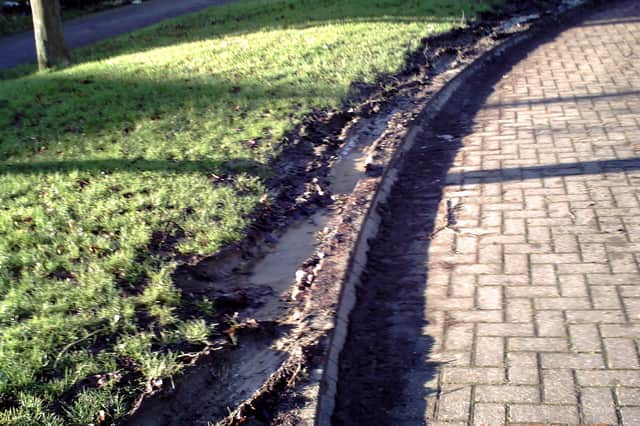
“Once I'd made it neat and tidy, I found people were using it as an extension to the carriageway. I'd seen people parking on it, mounting it and using it as part of the turning space, leaving out the soil and leaving a muddy trench. I had to go out there multiple times with a topsoil and grass seed."
Kevin spent three years researching different designs as he wanted to make sure his fence couldn’t cause accidents such as "hurting little Johnny on his bicycle". While researching how to make the spikes "disappear", he realised they needed protecting.
He said: "The plastic fence covers the spikes and the only way to expose the spikes is with enough weight on top of them to break the plastic fencing. The plastic will break along the perforations exposing the fence supports which are hollow tubes with a chamfered top edge.
“This means if an attempt is made to use a motor vehicle to vandalize a lawn or verge the driver will no longer be able to just drive away leaving the damage for the land owner to repair.
"Because you can lift the spikes and fence out of the ground, you can then cut the grass as only the base plate which is at ground level."
Kevin believes his patented design would be significant in preventing unauthorised encampments and would love to see local authorities and councils put it into use.
He pointed out his own council, Milton Keynes, had invested £250,000 over the last five years to protect sites with barriers such as concrete blocks or mounds of earth.
He said: "I read news articles almost daily about where this product could be used. Its use for stopping unauthorised encampments would be phenomenal - and it would be cheaper."
Kevin had bought a Hyundai Getz on its last legs to test the fence's ability to puncture tyres and hopes to see his prototype rolled out widely in future.
He said his Smart Fence would protect homeowners from bad drivers absconding the scene and had sought advice around if the user could be held liable.
Kevin added: "If I try and jimmy your backdoor with a screwdriver and it breaks, you don't have to pay me for damages. Tearing up a garden is criminal damage. If you're committing criminal damage and you damage your tools such as a car, it is your responsibility."
A Milton Keynes highways spokesperson said: "Under the law, items can’t be placed on public highway land without the proper authorisation. Items may only be placed on the highway where the appropriate permissions have been granted and suitable safety measures are in place to protect all road users."