
Milton Keynes charity works with EastEnders on hard-hitting brain tumour storyline
The popular soap turned to a charity based in Shenley Wood to advise on its latest plot line
A medical research charity based in Milton Keynes is working with EastEnders scriptwriters on a hard-hitting brain tumour storyline.
The popular BBC One soap has teamed up with Brain Tumour Research, based in Shenley Wood, and Macmillan Cancer Support to ensure its storyline of a young person’s brain tumour journey is portrayed as realistically and sensitively as possible.
In scenes aired last week, EastEnders character Lola Pearce was rushed to hospital after suffering a seizure at home. She was subsequently given the devastating news that she had brain cancer, a glioblastoma (GBM), which carries an average prognosis of just 12 to 18 months.


Danielle Harold, the actress who plays Lola, met with Brain Tumour Research supporters, including brain tumour patients and their families, in preparation for this storyline.
She said: “It means so much to be trusted with a storyline like this – one that’s close to many people’s hearts.
“Sadly many of our viewers will be able to relate to Lola’s story, and it’s been heartbreaking to speak to the families affected by brain tumours and hear their stories.
“They’ve been so amazing in sharing their experiences with me, and I’m so lucky to have them. I wouldn’t be able to do this storyline without their support.”
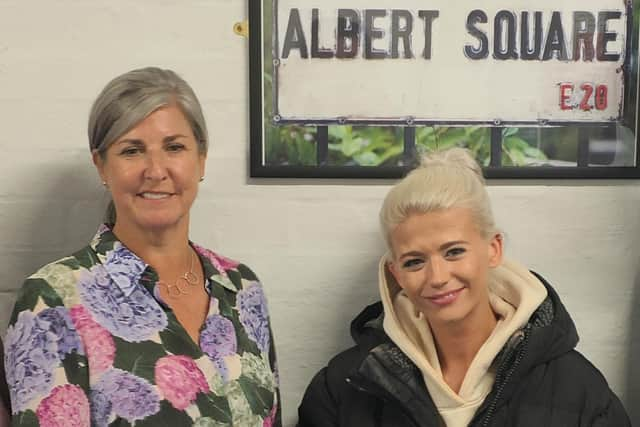
Nash resident Sue Castle-Smith, head of PR and communications at Brain Tumour Research, said: “We’re extremely grateful to EastEnders for helping to raise awareness of brain tumours, which kill more children and adults under the age of 40 than any other cancer.
“Sadly, Lola’s story will be all too familiar to one in three people who know someone affected by this devastating disease.
“Increased awareness is vital as we campaign for the government and the larger cancer charities to invest more to improve outcomes for patients and ultimately to find a cure.”
Brain Tumour Research funds sustainable research at dedicated centres in the UK. The charity is the driving force behind the call for a national annual spend of £35 million in order to improve survival rates and patient outcomes in line with other cancers such as breast cancer and leukaemia and is also campaigning for greater repurposing of drugs.