
Smartphones make your teenager three times more likely to suffer depression, says Milton Keynes expert
An MK expert on technology and young people’s mental health has spoken out about why she supports tighter restrictions on smartphones and social media for under 16s.
Dr Elizabeth (Liz) FitzGerald is a Senior Lecturer at The Open University specialising in learner‑centred technologies, mental health, and researcher development.
Her work has won awards for challenging traditional assumptions about learning approaches, and she continues to champion equality, diversity, inclusion and accessibility in education. She works with students who experience anxiety, depression, and other wellbeing challenges that affect their learning.
In a special viewpoint article for the Citizen, she writes:
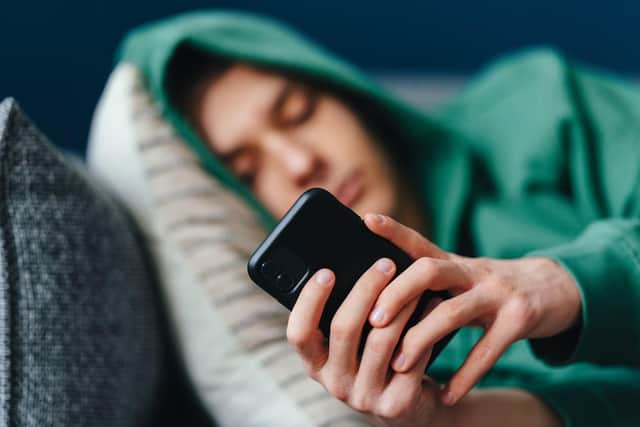

‘A growing body of research and a rising number of safeguarding incidents are intensifying calls for tighter restrictions on smartphone and social media use among under16s. The debate has gained fresh momentum following the UK Government’s newly launched consultation on a nationwide social media age ban and stronger mobile phone rules in schools.
I work at the Open University’s Institute of Educational Technology and the lead for the OU’s Mental Health Network. The Institute has a strongly ‘protechnology’ stance (with projects on Virtual Reality, artificial intelligence etc) as long as it is used in the right way.
I would argue that smartphones pose significant risks to young people when used without boundaries. As well as working for the OU, I’m a parent of a secondary school pupil and am firmly in support of stricter controls, especially in relation to mental health.
Recent studies from King’s College London highlight the scale of the problem: teenagers who show signs of problematic smartphone use are twice as likely to experience anxiety and nearly three times as likely to experience symptoms of depression.
A major 2025 study published in The Lancet Regional Health – Europe similarly found heavier phone use to be associated with poorer wellbeing, more disrupted sleep, and lower academic outcomes in UK secondary pupils.
Alongside academic concerns, researchers warn of escalating psychological and safeguarding risks. A Common Sense Media analysis of real smartphone data showed many teens receiving more than 200 notifications per day, leading to digital overload and disrupted sleep.
Meanwhile, NSPCC figures show a record 7,062 online grooming offences in 2023/24, with 11–16 year olds the most common victims.
Exposure to harmful online content – including pornography – as well as pressure from constant social comparison on social media platforms continues to worry parents, teachers and mental health specialists.
Ofsted’s national review reported that a large majority of girls aged 11–16 had received unwanted explicit images.
However, many parents say they feel powerless to manage their child’s digital world. Notifications, social media pressure, and online comparison culture are all contributing to what researchers such as myself describe as “digital overload”.
Under the Government’s new proposals, Ofsted will be empowered to scrutinise schools’ mobile phone policies, with the aim of making school environments “phone free by default”. Campaign organisations such as Smartphone Free Childhood and Papaya have also called for practical guidance for schools and families.
I hope that schools will take a leading role and set a positive example, with MK’s strong record on education and innovation. My local MP, Chris Curtis has stated that he wants “stronger, more decisive action” and is working with colleagues in Parliament to enable this.’
The Government’s consultation is expected to run over the coming months, with formal recommendations due later this year.
Liz suggests that some alternatives to smartphones are "brick" phones and GPS trackers, which are easily found online and in shops.
“The Papaya website and Smartphone Free Childhood give ideas for phones that are not 'smart'. There are reports that teenagers are limiting own smartphone use to manage mental health, and would stop their own children from having them until their late teens,” she said.