
Thousands more bowel cancers to be detected and prevented with more sensitive home tests
A bowel cancer survivor from Milton Keynes praises NHS plans to increase the sensitivity of bowel cancer screening to save more lives.
The threshold for home-screening kits to trigger urgent cancer testing will be lowered this month, the NHS announced last week. This will prompt hospital checks for thousands more people found with even smaller traces of blood in their poo.
The NHS estimates the change could help detect around 600 more bowel cancers early each year in England – around an 11% increase. As well as finding 2,000 more people with high-risk polyps in their bowel, allowing patients to have preventative surgery before any cancers develop.
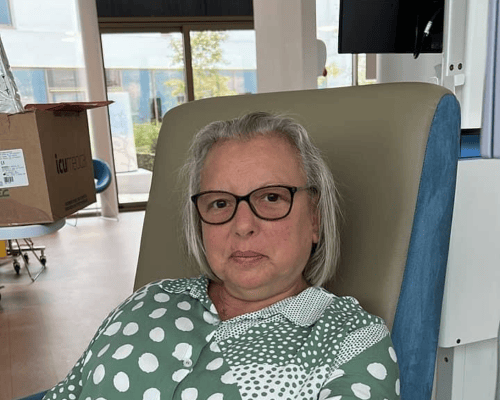
This is a welcomed change for Tina Muggleton, a bowel cancer survivor from Milton Keynes. Tina said: “I think the news is wonderful and a step in the right direction. Us British have a stiff upper lip and can't deal with change. What people need to know is - all it takes is pooing in a pot to save your life - just do it.”

The home-testing kit (known as the faecal immunochemical test (FIT)), is offered to everyone over 50 years old and checks for blood in a small stool sample, which can be a sign of bowel cancer.
By reducing the small amount of blood needed in a sample to trigger further investigation – from 120 micrograms of blood per gram of poo down to 80 – the NHS will offer 35% more screening colonoscopies each year to help diagnose or rule out bowel cancer.
The move comes as the NHS is set to launch new digital alerts that a screening kit is on its way in a bid to boost uptake. It’s part of a radical new National Cancer Plan aiming to transform cancer care by 2035.
Genevieve Edwards, Chief Executive of Bowel Cancer UK, says: “NHS England's recent change to the sensitivity of bowel cancer screening is fantastic news. Increasing the sensitivity of the test means more cancers will be prevented and found earlier, saving more lives from the UK’s fourth most common cancer.
"Whatever your age, if you’re experiencing symptoms of bowel cancer like bleeding from your bottom, blood in your poo or a change in your pooing habits, please contact your GP to ask for an at-home test. It could save your life.”
Most people who complete their test will not need further checks, but for those who do, early action can be life-saving. Currently, it’s estimated that around 2 in 100 people who take part in bowel screening will need further testing. This is expected to increase to 3 in 100 after the threshold is lowered.
Most people who complete their home test won't need further checks, but for those who do, early action can be life-saving. Currently, it’s estimated that around 2 in 100 people who take part in bowel screening will need further testing. This is expected to increase to 3 in 100 after the blood threshold is lowered.
The test itself does not change, and remains simple. FIT tests are done at home by putting a sample of poo in a small tube and returning it by post to the NHS for testing.
Once fully implemented, testing at the lower threshold is expected to reduce late-stage diagnoses and deaths from bowel cancer by around six per cent – while preventing and detecting more cancers earlier will also save the NHS £32 million each year.
Testing at the lower threshold is expected to reduce late-stage diagnoses and deaths from bowel cancer by around six per cent. At the same time, preventing and detecting more cancers earlier will save the NHS £32 million each year.
Peter Johnson, National Clinical Director for Cancer at NHS England, said: “This is a major step forward in bowel cancer detection and will help save hundreds more lives from this devastating disease.
“Earlier detection can mean less intensive treatment and ensures the best chance of survival, and in many cases people could avoid facing cancer altogether by having dangerous polyps removed before they cause harm.
“I would strongly encourage everyone who is sent a bowel screening test to complete it and return it as soon as possible — it really could make all the difference.”