
Tributes paid to surgeon who developed life-saving technique while working at Milton Keynes Hospital
Tributes have been paid to a surgeon who developed a life-saving technique during his time working at Milton Keynes University Hospital.
Professor Christopher Balogun-Lynch, who died aged 81, developed the B-Lynch Brace Suture, a surgical technique which has been credited with saving the lives of women worldwide.
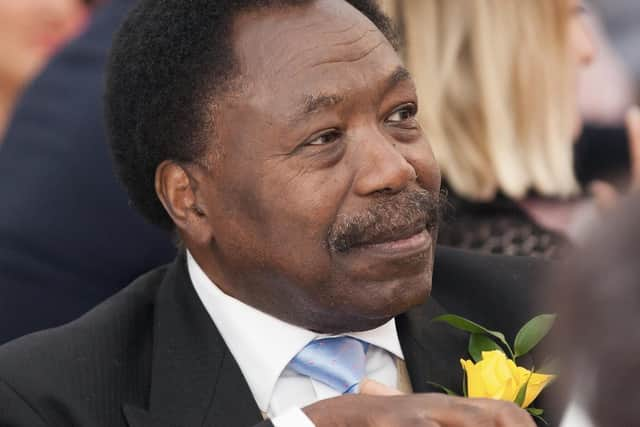

The technique provided a way of controlling postpartum haemorrhaging while preserving fertility, and used readily available and inexpensive materials.
It was first published in 1997, while Professor Lynch was working at Milton Keynes Hospital, where he helped set up the department of obstetrics and gynaecology.
His son Dr Josh-Balogun Lynch, who works for a GP practice in Buckinghamshire told the Citizen: “The development of the B-Lynch Brace Suture had an impact on both his career and the wider field of obstetrics.
“The success of the procedure established him as a recognised international expert in the management of postpartum haemorrhage and led to invitations to lecture, teach and demonstrate the technique around the world.
“What gave him the greatest satisfaction, however, was knowing that such a simple innovation had saved the lives of countless women and helped many avoid emergency hysterectomy.”
Professor Lynch was born in Sierra Leone in 1944, and after coming to the UK on a boat during the windrush, graduated in law from Oxford, and later in medicine from St Bartholomew’s Hospital Medical School in London.
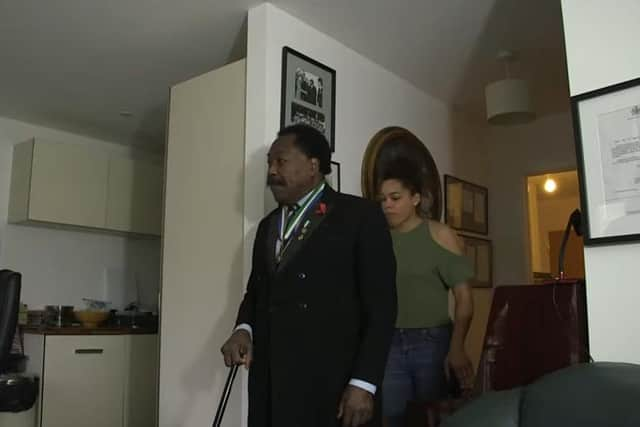
He became chief assistant to the Queen’s gynaecologist from 1981 to 1983, and a year later was appointed as a consultant obstetrician and gynaecologist at Milton Keynes Hospital, where he remained until he retired from the National Health Service in 2010.
During his medical career, Professor Lynch founded The Myrtle Peach Trust charity for the prevention and treatment of cervical and ovarian cancer and served as a Commissioner for the World Health Organization for women’s health improvement in Africa.
Josh added: “My father definitely influenced my decision to pursue medicine.
“From an early age I was inspired by both his work and the impact he had on patients and colleagues.
“Despite his many achievements and international recognition, he remained a real people person and was always willing to give up his time to help others.
“He was always happiest teaching, mentoring younger doctors and spending time with his family, particularly his grandchildren in his later years.
“Milton Keynes Hospital was there for him in his later years’ and we are particularly thankful for the care that he received there.”
After retiring from the NHS in 2010 Professor Lynch returned to his native Sierra Leone to teach medical students and doctors under the humanitarian organisation CapaCare.
He was later awarded a GORSL, the equivalent of a knighthood, by the President of Sierra Leone, for his work for charity and internationally, and was the subject of two works in the National Portrait Gallery.
In 2018 Professor Lynch was interviewed as part of a documentary series called Hidden Stories, in a project produced by the Junior Filmmakers Club in Milton Keynes, which sought to protect the legacy and contributions of black people to the city.
During the interview Professor Lynch reflected on how he helped to ‘start Milton Keynes Hospital from nothing.’
In a LinkedIn post announcing his father’s death Josh wrote: “We are grateful for the many messages and tributes received in recent days, which have been a great comfort to our family.
“His legacy lives on in the doctors he mentored, the women whose lives he helped save, the family he loved, and the countless people worldwide who continue to benefit from his work.
“He will be greatly missed and forever remembered.”
Professor Lynch leaves behind four children and four grandchildren.
Funeral directors H W Mason & Sons have announced that Professor Lynch’s funeral will take place on Saturday July 11 at 11am at Christ the Cornerstone Church in the city, and will be followed by a private burial.
Donations in Professor Lynch’s memory can be sent to the Practical Obstetric Multi-Professional Training Maternity Foundation (PROMPT).
The aim of the PROMPT charity is to reduce preventable harm to mothers and babies in maternity care by making training as widely available and effective as possible, including in the Professor’s home country of Sierra Leone.