
Tributes pour in for Stephen Hawking, the famous theoretical physicist who died at age 76

Alan Duffy, Swinburne University of Technology; Alice Gorman, Flinders University; Jonti Horner, University of Southern Queensland; Lisa Harvey-Smith, CSIRO; Matthew Bailes, Swinburne University of Technology, and Steven Tingay, Curtin University
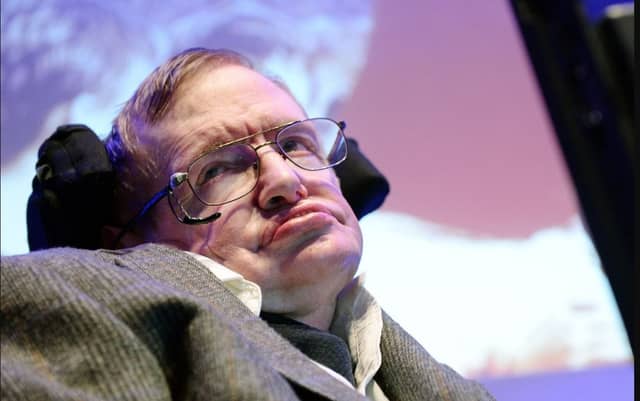
Acclaimed British theoretical physicist, cosmologist and author Stephen Hawking has died aged 76. Hawking is best known for his work on black holes, which revolutionised our understanding of the universe.
Hawking passed away today peacefully at his home in Cambridge, his family confirmed in a statement:
We are deeply saddened that our beloved father passed away today. He was a great scientist and an extraordinary man whose work and legacy will live on for many years.
His courage and persistence with his brilliance and humour inspired people across the world. He once said, “It would not be much of a universe if it wasn’t home to the people you love.” We will miss him forever.
Hawking was born on January 8, 1942, in Oxford, England. In 1963 he was diagnosed with ALS, a form of Motor Neurone Disease, and later confined to a wheelchair and forced to communicate via a computerised voice. But he continued his theoretical work and was outspoken on many things over much of his life.

Tributes have been pouring in on social media for the scientist, who made complex science accessible to everyone in his 1988 bestselling book A Brief History of Time.
Among those early to pay tribute were the American astrophysicist Neil deGrasse Tyson and NASA.
Others to pay tribute include Microsoft CEO Satya Nadella and the Prime Minister of India, Narendra Modi.
Hawking’s acclaimed book, A Brief History of Time, was made into a documentary in 1991, directed by Errol Morris, who also paid tribute.
Australian reaction
There have been reactions too from the world of Astronomy in Australia.
Alan Duffy, Associate Professor and Research Fellow, Swinburne University of Technology
Professor Stephen Hawking was an inspiration to me to become not just a scientist but a communicator of that science.
His work as a cosmologist, and discoveries in black hole physics were legendary. His best-known prediction, named by the community as Hawking Radiation, transformed black holes from inescapable gravitational prisons into objects that instead shrink and fade away over time.
His writings were inspirational to many scientists and enriched the lives of millions with the latest science and cosmic perspectives. He was also wonderfully funny with a fantastic media savviness that propelled him into A-list celebrity stardom as few other scientists before.
Through it all, of course, his illness made his achievements near-superhuman. How he manipulated Einstein’s equations in his mind when he could no longer hold a pen I can’t even begin to imagine.
While his many contributions will live on there is no doubt that science and the wider world is the poorer for his passing.
Jonti Horner, Professor (Astrophysics), University of Southern Queensland
I think Stephen Hawking’s biggest achievement was getting people talking and interested in some very complex and challenging ideas about the universe and our place in it.
I remember the fuss when his book A Brief History of Time came out, and how it became such a big deal in the UK. It was amazing how widely read and discussed it was, particularly given its content (stuff that is usually portrayed as being really difficult and/or boring).
It was a fantastic example of how even the most complex and challenging ideas can capture the imagination, when they’re explained in the right way. Above and beyond the great research he did, his impact as a communicator was fantastic.
He definitely did a lot to bring those kind of concepts into the mainstream, and doubtless inspired a whole new generation of cosmologists and astronomers. That is probably the best legacy any scientist could ask for!
Lisa Harvey-Smith, Group Leader - Australia Telescope National Facility Science, CSIRO
Stephen Hawking was undoubtedly an intellectual giant, making leaps of reasoning that sometimes led to startling insights into the nature of the physical world. His finding that black holes slowly dissolve will probably be his greatest scientific legacy.