
Bletchley Park's secret footballing history recreated by MK Dons
The club commemorated Bletchley Park codebreakers’ lesser known hobby
Bletchley Park’s forgotten footballing history has been recreated by MK Dons’ first-team in their codebreaker-inspired kits.
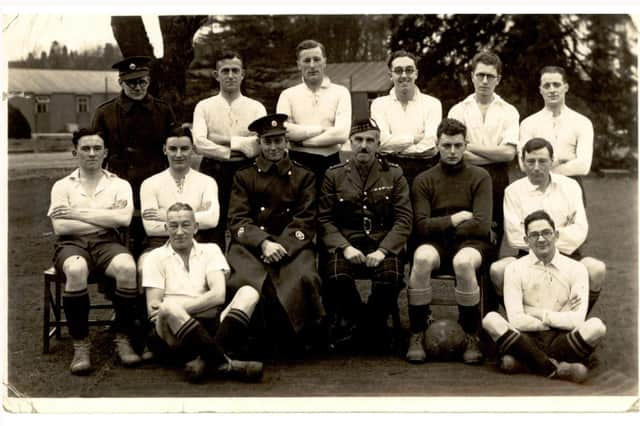
World famous for their role in cracking the Enigma code which proved pivotal in turning the rides in the Second World War, rarely-seen social lives of those working at the secret station have been revealed in a picture from 1941, showing codebreakers, including cryptanalyst Col. John Tiltman, swapping cyphers for football boots.

This season, Dons revealed their new away kit to feature Enigma keys printed into the grey shirts to mark their links with the nearby Bletchley Park, just a couple of miles from their Stadium MK home.
Paul Warne’s first team visited the location in the summer to learn more about the history of Bletchley Park, and attended again this week to recreate the picture of the footballers from 84 years ago.
Dr David Kenyon, Research Historian at Bletchley Park Trust, said: “Although we don’t know the team name they played under, from the photograph, we can see the players were all army personnel and were likely based in Hut 5, which sadly no longer exists on site.
"They might have played internal teams or perhaps against other military units and institutions.
“There were many sports and activities that took place in and around Bletchley Park when it was operational during the war.
“There’s often a perception that being smart means you can’t have skills in other areas, but that simply isn’t the case. Important figures in Bletchley Park’s story, such as Commander Alastair Denniston, head of the Government Code & Cypher School at Bletchley Park, who represented Scotland in the 1908 Olympics in hockey, and Alan Turing, a keen long-distance runner whose times could have qualified him for the 1948 Olympics but for injury, show the wide range of talents found here.”
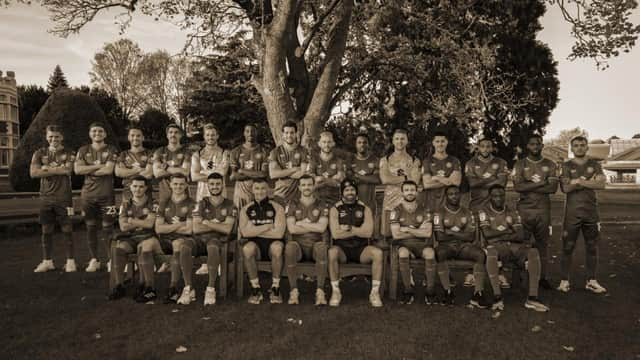
Posing in front of the same tree as the original picture for their recreation, Dons’ football operations director added: “It’s incredible to stand where people once worked in total secrecy on codebreaking that had a major impact on World War Two, and to think they also made time for football.
"It’s a privilege to commemorate that part of our shared story.”