
Seen a baby bird struggling on the ground in Milton Keynes? This is why you should NOT pick it up
City experts have urged people not to automatically pick up fledging birds seemingly struggling alone on the ground at this time of year.
Milton Keynes Wildlife Network volunteers say they are facing an “overwhelming” number of healthy fledglings brought in by well-meaning members of the public who assume the tiny creatures have been abandoned by their parents.
But in the majority of cases the birds have not – and are, in fact, carrying out an important process before they learn to fly efficiently.
The process is called Fledging, which gives the fledglings their name.
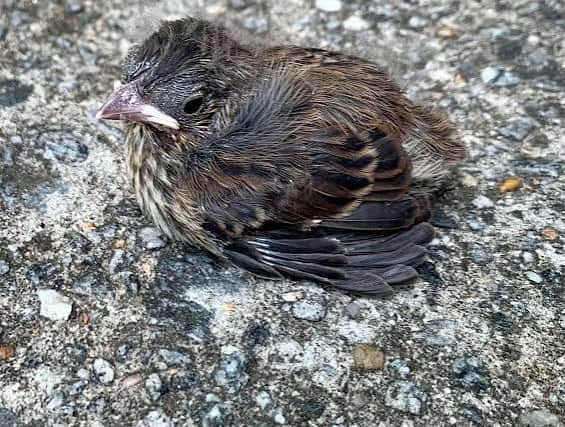

“Fledging is a completely normal and essential stage of a young bird’s development,” said a spokesperson for Milton Keynes Wildlife Network. "Once a young bird leaves the nest, it may spend considerable periods sitting quietly on the ground, in bushes, on low branches or in other seemingly vulnerable places. Its parents are usually nearby, continuing to feed and watch over it while encouraging it towards independence.”
They added: “People genuinely mean well, and nobody wants to walk past an animal that needs help. But sometimes the kindest thing you can do is leave it alone. A fledgling sitting quietly by itself is not automatically abandoned. Its parents may simply be away finding food, or waiting for you to move away before they return.
“The problem is not unique to Milton Keynes. Every year, particularly during the spring and summer breeding season, wildlife rescues across the UK receive young birds that were never actually in trouble. They have been picked up by well-meaning people who see a baby bird alone and understandably assume it has been abandoned...In most cases, it hasn’t.”
The network is asking people who find a fledgling that appears bright, alert and otherwise healthy to observe it from a distance rather than immediately picking it up. Human presence can prevent nervous parents from returning, so standing close to the bird and waiting for a parent can actually make the situation more difficult.
If the fledgling remains in the same location for an extended period, appears to deteriorate, or there are other concerns, people should contact an experienced wildlife rescue for advice before intervening wherever possible.
There are, however, circumstances where a young bird clearly does need help. Warning signs can include:
* Visible wounds, bleeding or obvious injuries
* Being unable to stand, balance or move normally
* Being unusually limp, weak or unresponsive
* Sitting with its eyes closed and showing little reaction to its surroundings
* Being persistently fluffed up and withdrawn
* Wings hanging or lying unusually flat
* Persistent open-beak breathing or obvious difficulty breathing
* Sticky, crusted, swollen or closed eyes
* Discharge from the eyes, nostrils or beak
* Severe thinness or obvious emaciation
* Signs of dehydration, overheating or extreme exhaustion
* Being covered in flies, fly eggs or maggots
* Having been caught or mouthed by a cat or dog
* Being in immediate danger from traffic, machinery or another unavoidable hazard
This summer’s prolonged dry conditions are adding another serious problem. Natural sources of water are disappearing or becoming increasingly difficult for wildlife to access, while food availability is also being affected. Local rescuers are seeing young birds coming into care that should be strong, active and well developed but are instead severely underweight and struggling.
The spokesperson said: “We are seeing both ends of the problem. We are receiving genuinely compromised young birds that are thin, dehydrated and struggling because conditions are so difficult. At the same time, limited rescue spaces are being taken up by perfectly healthy fledglings that somebody has picked up because they thought being alone meant being abandoned.
“Those parents have spent weeks incubating eggs, protecting their nest and feeding their young. Then, right at the point where that youngster is learning how to survive independently, somebody can unknowingly remove it from everything its parents have spent weeks teaching it. Once that happens, reuniting the family may not always be straightforward.”
The network stresses that this is not about blaming members of the public. Most unnecessary interventions happen because somebody cares enough to want to help. The aim is to make sure that compassion is backed by the right information, said the spokesperson.
“Where a healthy fledgling is concerned, intervention should be minimal. If there is a very localised danger, such as the bird sitting in the middle of a path or exposed to direct sun, it may sometimes be appropriate to move it a very short distance to nearby cover, provided it remains within the area where its parents can find it. It should not be taken home simply because it is alone,”
“During prolonged hot and dry weather, one of the most useful things people can do is provide clean, shallow water in gardens and other safe spaces. Water should be refreshed regularly and containers kept clean. Providing shaded areas and allowing some parts of gardens to remain wildlife-friendly can also make an enormous difference..
“Wildlife rescue should always be about intervening when intervention is necessary. Sometimes helping means catching an animal, getting it veterinary treatment and bringing it into care. Sometimes helping means putting down some clean water, moving away and allowing its parents to carry on doing the job they have been doing perfectly well without us.
“Please don’t make a wild animal an orphan by trying to rescue one that already has parents...Watch first. Keep your distance. Look for genuine signs of illness or injury. If you are unsure, ask an experienced wildlife rescuer for advice before picking it up.”