
Estate agent jailed after turning rental homes into cannabis factories in Luton and Milton Keynes
The boss of an estate agency who used his business to set up 19 cannabis factories in rental houses has been sent to prison.
Sarfraz Farooq, aged 46, director of Condor Estates, was sentenced to more than eight years.
He was one of five men arrested after Bedfordshire police ran Operation Costello to uncover a sophisticated network involving cannabis cultivation, fraudulent tenancy agreements, the purchase of specialist hydroponic equipment and money laundering.
All five men were sentenced at Luton Crown Court on Thursday 10 September to to a total of 4 years as the forced vowed to continue to tackle organised crime across the county.
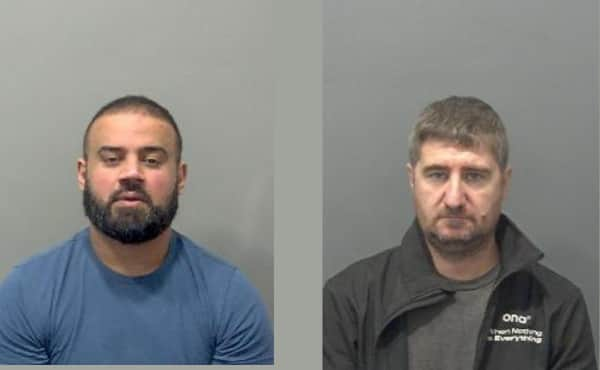

The court heard how Farooq used homes belonging to genuine landlords who trusted the agency to legitimately rent out their properties and were provided with what they believed to be valid tenancy agreements and rental payments.
But instead of filling the homes with tenants, the offenders were secretly cramming them with cannabis plants.
Officers raided 19 in Luton and one in Milton Keynes and found cannabis factories at each one. Almost 2,000 plants were recovered, worth up to £800,000. It is estimated that had the properties not been discovered, the plants could have generated cannabis with a street value of more than £2 million in just 12 months.
At the forefront of the network and was responsible for a significant quantity of fraudulent documentation, including paperwork used to create false tenancy agreements for the properties..
Farooq’s counterpart, Uan Gogu, 42, played a central role in establishing the cannabis factories. He used properties connected to Farooq and arranged for specialist hydroponic equipment to be installed. He was also involved in bypassing electricity meters, creating significant safety risks and causing fires at three of the properties.
Also involved were Zohaib Riaz Ali, 33, who assisted the operation through the purchase of hydroponic equipment, while Mohammed Farooq, 76, purchased a property in cash that was subsequently discovered to be operating as a cannabis factory.
Sarfraz Farooq, of St Catherines Avenue, Luton, was sentenced to eight years and four months' imprisonment for his role in the cannabis conspiracy and related fraudulent activity.
He has also been disqualified from acting as a company director for 10 years.
Uan Gogu, of Ashcroft Road, Luton, was sentenced to six and a half years imprisonment for conspiracy offences and possession relating to the cannabis factories.
Zohaib Riaz Ali, of Biscot Road, Luton, was handed a four-month prison sentence, suspended for 12 months, for intentionally encouraging the offence.
Also sentenced was Glentjan Sefaj, 29, of Latimer Drive, Hornchurch, who received an eight-month prison sentence, suspended for 18 months, for conspiracy, and Mohammed Farooq, 76, of St Catherines Avenue, Luton, who received a nine-month prison sentence, suspended for 12 months, for his role in money laundering.
Detective Chief Inspector Simon Mullan, from the force's Operation Costello team, said: "These sentences represent a significant result against an organised criminal network that was operating cannabis factories on an industrial scale across our county.
"Drug dealing goes far beyond street dealers. Behind what the public sees, this type of high-level criminality relies on a network of individuals carrying out different roles, from sourcing properties and producing fraudulent documentation to supplying specialist equipment and maintaining cultivation sites.
"But the impact and dangers of these factories go beyond the growth of cannabis plants. Behind this network are victims who had their homes destroyed and left in a state of disrepair.
"Operation Costello is committed to identifying and disrupting every part of the organised crime chain, including those who enable criminal activity for financial gain. These convictions send a clear message that we will pursue everyone involved and bring them before the courts.
"We continue to urge communities to report suspicious activity in their neighbourhoods. What may appear to be anti-social behaviour can often be an indicator of much wider organised criminality, and the information we receive from the public plays a vital role in helping us tackle it."