
Cranfield University launches advanced research labs to support net zero goals
Cranfield University has built new advanced research laboratories to support net zero goals in aviation.
A brand new test cell facility has been built at the university to help create new technologies aimed at decarbonising aircrafts.
The Cranfield Power & Propulsion Laboratories add to the University’s state-of-the-art research facilities and build on over fifty years of expertise in systems design, integration and performance.
The new laboratory is based next to the airport airside boundary at the centre of the Cranfield campus.
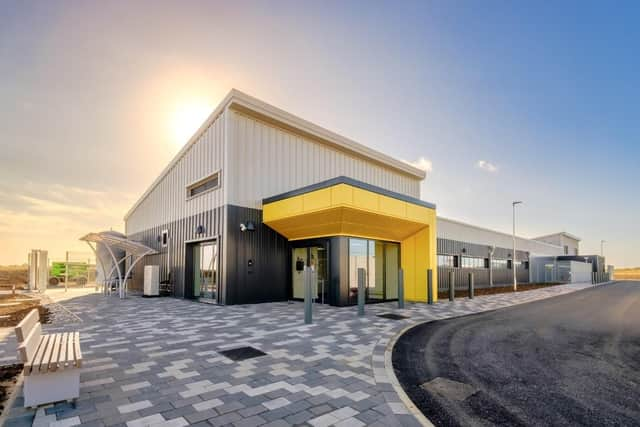

It is part of the Cranfield Hydrogen Integration Incubator project, and provides a space for cross-collaboration between industry professionals and academia.
Professor Vassilios Pachidis, Head of Centre for Propulsion and Thermal Power Engineering, said: “Cranfield’s new Power and Propulsion Laboratories (CPPL) will drive the development of new technologies for decarbonising aviation.”
The facility will be used to train new talent urgently needed, including those enrolled in master’s and PhD programmes at Cranfield, such as those training in Net Zero Aviation.
“CPPL is set to play a key role in driving sustainable growth by delivering innovative solutions with global impact, and securing the UK’s industrial, research and academic leadership,” continued Professor Pachidis.
Building works were in September, with specialist project equipment now being put in place. There will be a formal opening event for the new facility in November.
Professor Pachidis said: “CPPL will focus on the aerodynamic and thermodynamic integration of new power systems with the aircraft.
“This includes the utilisation of sustainable aviation fuels including hydrogen, electrification and hybridisation, and exploring the potential benefits of supercritical CO2 and other ‘unusual’ working fluids for thermal management applications.”
The Cranfield Hydrogen Integration Incubator project will connect and grow research facilities at the University, to unlock the technical challenges around hydrogen-enabled aviation.
This includes the development of the Hydrogen Integration Research Centre, which is currently under construction. It will extend an existing facility to create new labs for advanced testing and innovation around hydrogen and hydrogen based technologies.
The Cranfield Hydrogen Integration Incubator project is supported by Research England and partners under the UK Research Partnership Investment Fund. It will create the first large-scale hydrogen research hub at a UK airport.